
Quick Answer
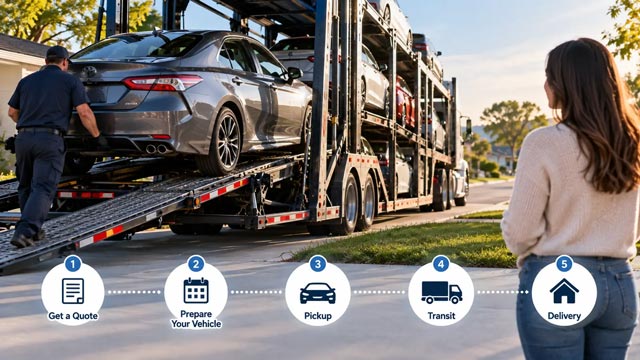
Car shipping works by handing your vehicle off to a licensed auto transport company that loads it onto a carrier truck and drives it to your destination for you. You request a car shipping quote, choose open or enclosed transport, prepare your vehicle, and meet the driver on pickup day. From there, your car travels with a vetted carrier and typically arrives within one to two weeks for cross-country moves, depending on distance and route.
How does car shipping work? After more than 17 years in the auto transport industry, I hear this question from nearly every first-time customer, whether they’re relocating for a new job, sending a car to a college freshman, or running snowbird routes twice a year. Once you understand the steps, from requesting a car shipping quote to signing off at delivery, the auto transport process stops feeling like a mystery and starts feeling like a plan. Let’s walk through exactly what happens, step by step, so you know what to expect before your car ever leaves the driveway.
What You Should Know Before You Start
Is car shipping safe for my vehicle?
- Carriers must carry active cargo insurance before they’re legally allowed to haul your vehicle.
- Reputable car shipping companies vet drivers through USDOT compliance checks and performance history, not just a quick background check.
- Ask for proof of insurance and the carrier’s DOT number before you book, and confirm both independently.
How much does a car shipping quote typically cost?
- Distance, vehicle size, and transport type (open or enclosed) drive most of the price.
- Rates commonly fall between $0.61 and $2.60 per mile, depending on route and season.
- Compare quotes from at least three companies, and treat a quote that’s far below the others as a warning sign, not a bargain.
- Ask what your insurance coverage actually includes before you compare prices alone.
How long does the car shipping process take?
- Pickup and delivery run on windows, not exact dates, since carriers combine several vehicles on one route.
- Cross-country shipments generally take longer than regional moves.
- Ask your shipping coordinator for an estimated transit time before you book, and build in a few extra days of buffer.
- Remember that delivery dates are always estimated ranges, never guarantees, since road and weather conditions can shift a route.
- Lock in your shipment date with your coordinator once your vehicle is ready, rather than leaving it open-ended.
Do I need to be there for pickup and delivery?
- Someone 18 or older needs to be present, or you can authorize another adult to sign for you.
- The driver needs a safe, open space to load and unload your vehicle, so a wide street or nearby lot sometimes works better than a tight driveway.
- Confirm your availability window with your shipping coordinator ahead of time so pickup doesn’t get delayed.
- Get a firm pickup window and pickup date in writing so you can plan the rest of your day around it.
|
$0.61–$2.60
Typical cost per mile for car shipping
|
7 to 10
Vehicles a standard open carrier can haul at once
|
3+
Quotes worth comparing before you book
|
24/7
Support is available from a full-service transport company
|
Table of Contents
- How Does Car Shipping Work? An Overview of the Process
- Step 1: Get a Car Shipping Quote and Choose the Right Company
- Step 2: How to Prepare Your Vehicle for the Car Shipping Process
- Step 3: Pickup Day and the Vehicle Inspection Process to Expect
- Open Transport vs. Enclosed Car Transport: Which Service Fits
- The Bill of Lading: Your Car Shipping Paperwork Explained
- What Happens After Pickup: Transit and Delivery
How Does Car Shipping Work? An Overview of the Auto Transport Process
Car shipping involves a structured process for moving a vehicle from one location to another without you driving it. In plain terms, it breaks down into five stages: booking, preparing your vehicle, pickup, transit, and delivery. A broker like us arranges the shipment and vets the carrier network, while the carrier itself owns and drives the truck that hauls your car. The vast majority of shipments move through these five stages without any issue, and knowing what each one involves is what makes the process feel stress-free instead of overwhelming.
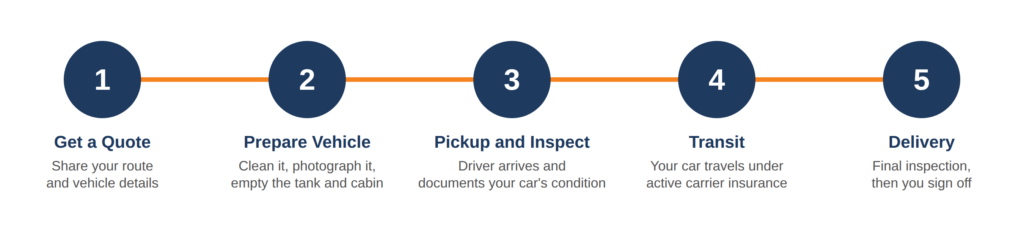
That distinction matters more than people expect. Brokers arrange transportation with carriers but don’t transport vehicles themselves, so the quality of a car shipping company often comes down to how carefully it screens the carriers it works with. This is exactly why families relocating across the country, military members shipping a vehicle to a new duty station, and snowbirds heading south for the winter all go through roughly the same auto transport process, even though their reasons for shipping couldn’t be more different. For a closer look at how the car shipping process works behind the scenes on our end, that page walks through our internal coordination in more depth.
Step 1: Get a Car Shipping Quote and Choose the Right Company
Every car shipping process starts with a quote. A legitimate car shipping company will ask for your pickup and delivery locations, your vehicle’s make and model, your vehicle registration details, and your preferred transport type before giving you a number. If a company gives you a firm price without asking any of that, treat it as a red flag rather than a shortcut.
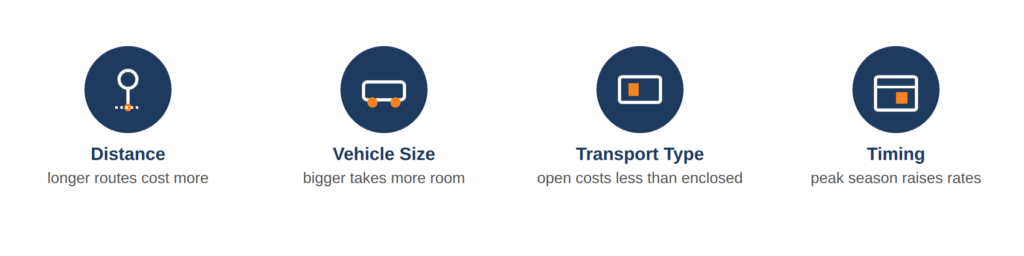
Working with a reputable company matters more than shaving a few dollars off the quote, and a reputable provider will walk you through every one of the questions below without hesitation. Before you book, dig into the company itself:
- Check its licensing and insurance through the Federal Motor Carrier Safety Administration.
- Look up its record with the Better Business Bureau, including how it handles complaints.
- Read verified customer reviews and pay attention to how the company responds when something goes wrong, not just when things go right.
- Ask directly how carriers get vetted, since reliable carriers are the backbone of any decent car transport service. If the answer is vague, keep looking.
That vetting question is worth pushing on. As Marco Maggiore, Chief Strategy Officer at ShipYourCarNow, puts it:

“In order to move a car for Ship Your Car Now, carriers have to go through a very stringent vetting process, which includes not only their overall performance but their individual driver’s performance, making sure they’re up to date with USDOT and that their insurance is in line.”
Marco Maggiore — Chief Strategy Officer, ShipYourCarNow
Step 2: How to Prepare Your Vehicle for the Car Shipping Process
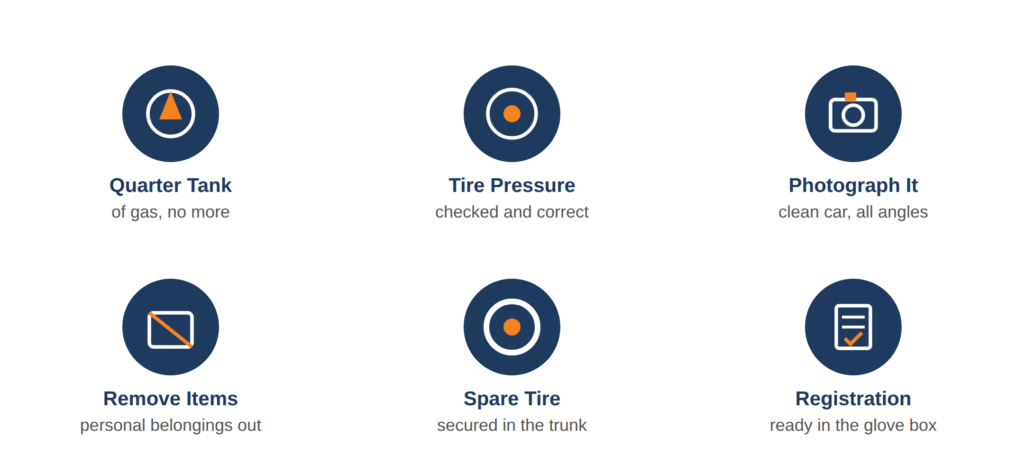
Once your car shipping quote is locked in, a little prep work on your end keeps pickup day quick and protects you if a damage claim ever comes up. Here’s the short version, or you can walk through our full vehicle preparation checklist for more detail:
- Remove personal items and personal belongings from the car. Anything left inside can create liability issues and generally isn’t covered by transport insurance.
- Keep your gas tank at a quarter tank or less. It’s plenty to drive on and off the carrier, and it keeps the vehicle’s weight down.
- Check tire pressure and make sure tires are properly inflated before pickup.
- Wash your car and take clear photos from all angles. A clean car makes it far easier to note pre-existing damage accurately, for you and for the driver.
- Remove toll tags and loose luggage racks, and leave a spare tire in the trunk rather than mounted where it can shift.
- Keep a copy of your vehicle registration in the glove box in case the carrier asks for it at pickup.
💡 Pro Tip: Take your photos in daylight, right before the driver arrives. Time-stamped photos from the same day as pickup carry more weight than photos from a week earlier if you ever need to reference your car’s condition.
Step 3: Pickup Day and the Vehicle Inspection Process to Expect
On pickup day, your transport driver arrives within the scheduled pickup window and walks the vehicle with you before it goes on the truck. This is the thorough inspection where the driver notes any existing scratches, dents, or wear, so there’s a clear baseline before your car ever touches the road.
You should also know exactly who’s showing up. That’s the entire point of a program like Know Your Trucker.
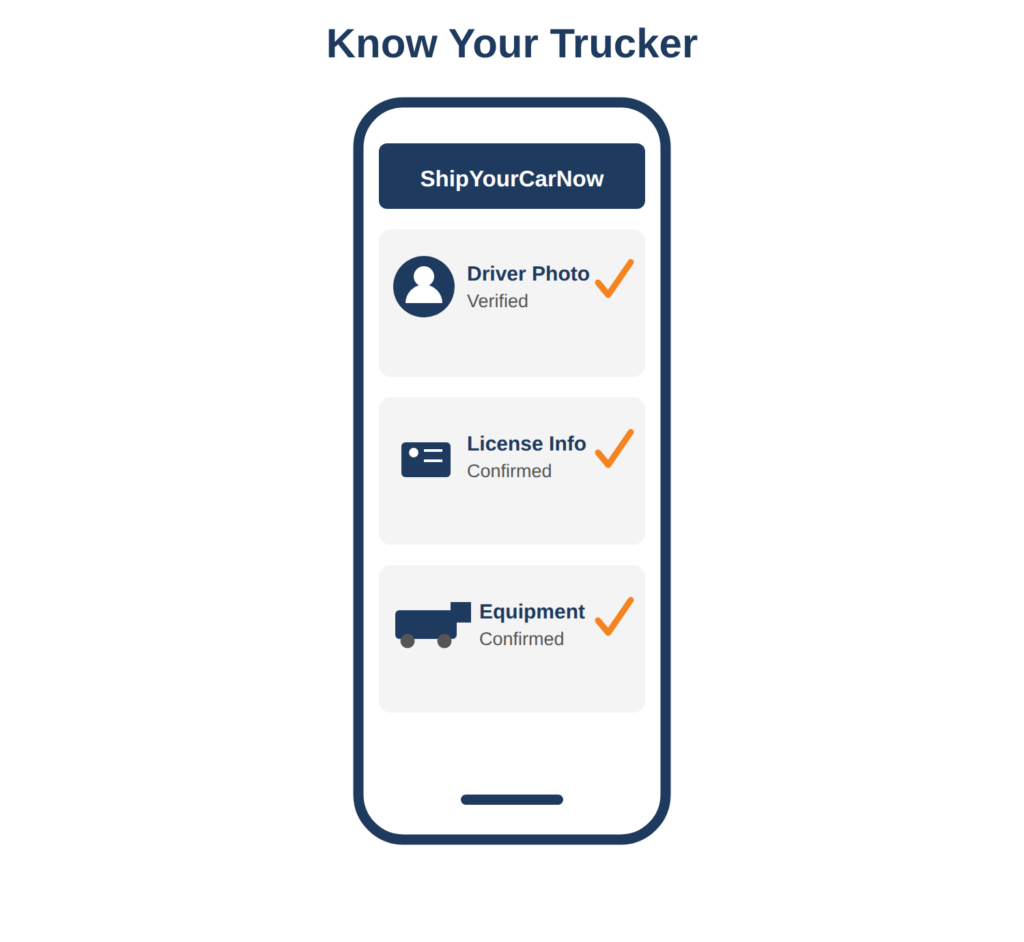
“On the day of pickup, you will receive a text message from us which will contain a link showing you the driver’s license and photo information of the assigned driver, as well as confirmation of the type of equipment showing up to pick up your vehicle.”
Marco Maggiore — Chief Strategy Officer, ShipYourCarNow
Watch Out: Don’t sign anything at pickup without reading it first. If the driver notes damage you don’t agree with, say so on the spot and ask for it to be corrected in writing before you sign.
Open Transport vs. Enclosed Car Transport: Which Service Fits
Every car transport service falls into one of two categories: open or enclosed. Most vehicles ship on multi-car open carriers, the same type of truck you’d see delivering new inventory to a dealership. Open car transport is the most common and most cost-effective shipping method, and a standard open trailer can carry seven to ten vehicles at once, which keeps costs down for everyone on the route.
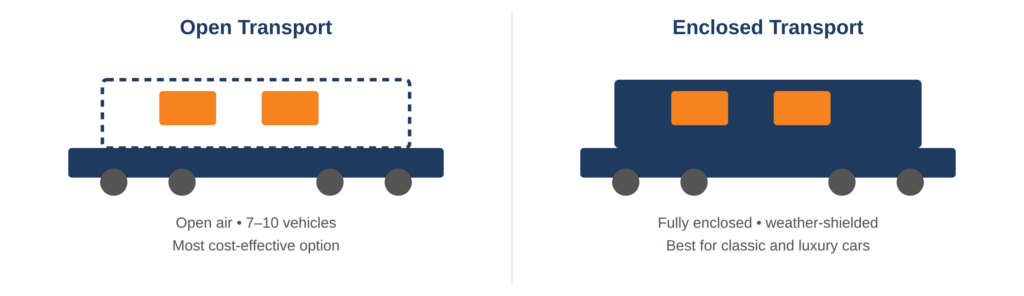
Enclosed car transport trades some of that cost efficiency for protection. Enclosed carriers keep your vehicle inside a fully enclosed trailer, shielded from weather conditions and road debris the entire trip, which makes it the better choice for classic, luxury, or exotic vehicles. Enclosed transport does cost more than open transport, since trailers carry fewer vehicles per trip. For exact current pricing on both options, our car shipping costs page breaks down the numbers by vehicle type and distance. If you’re shipping a high-value vehicle, it’s also worth asking about extra insurance on top of the carrier’s standard coverage.
| Feature | Open Transport | Enclosed Transport |
| Vehicles per trailer | 7 to 10 | Fewer, more specialized loads |
| Weather & road debris protection | Exposed to the elements | Fully shielded |
| Typical cost | Most cost-effective option | Costs more, since fewer vehicles fit per trailer |
| Best for | Daily drivers, most vehicles | Classic, luxury, or exotic vehicles |
If your schedule is flexible, terminal-to-terminal shipping is worth a look too. You drop your car at a terminal and pick it up at one near your destination, which can shave a little off the price in exchange for some extra legwork on your end. Whichever of these transport options you land on, ask your coordinator about additional services, like expedited shipping, that might fit your timeline.
The Bill of Lading: The Legal Document Behind Every Car Shipment
A Bill of Lading is a legal document for car shipping, and it does double duty as both a contract and a receipt for transport. It records your vehicle’s condition at pickup, including details like the odometer reading and the transport company’s information, and it becomes the reference point for everything that happens between pickup and delivery.
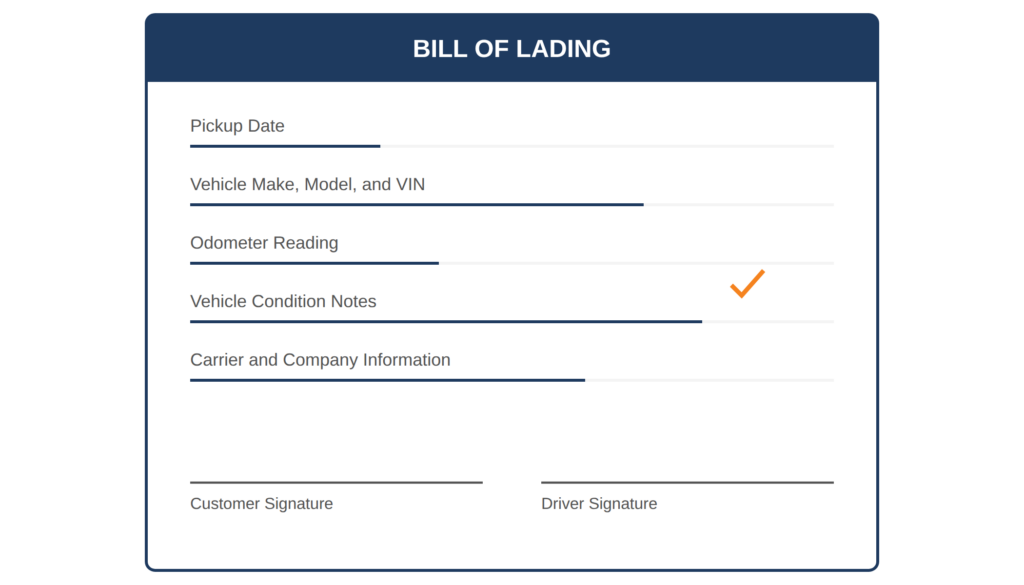
Good to Know: A Bill of Lading is required for filing an insurance claim. If your vehicle arrives with new damage, this document is what proves your car’s condition before it ever left your driveway.
Before you sign anything at the end of a shipment, inspect your vehicle carefully against what’s noted on the Bill of Lading. Walk around the car in daylight, check the areas the driver flagged at pickup, and look closely for anything new. If something doesn’t match, note it on the document before you sign, not after the driver leaves.
What Happens After Pickup: Transit, Delivery, and Final Inspection
Once your car is loaded, carriers maintain active transit insurance for the length of the trip. Basic cargo insurance coverage is typically included in the price of car shipping services, though coverage amounts vary by carrier, so it’s worth confirming the limits before you book. For questions about your own policy, consult your personal insurance agent, since your regular auto insurance may or may not extend to a vehicle in transit. Transit time itself depends on distance, route, and how many other vehicles are on your carrier’s path, and poor weather conditions along the way are one of the few things that can push a delivery date back.
| Route Type | What to Expect |
| Regional (under 500 miles) | Usually the fastest turnaround |
| Cross-country | Typically one to two weeks |
| Hawaii or international | Longer lead time due to port scheduling |
Delivery, like pickup, runs on a flexible window rather than a fixed date. If your timeline is tight, expedited car shipping can prioritize your vehicle on the route, and door-to-door auto transport delivers as close to your exact vehicle delivery address as the carrier’s truck can safely reach. Some carriers only run terminal-to-terminal, so ask upfront if true door-to-door shipping matters to you.
When the driver arrives for delivery, you’ll go through the same thorough inspection as on pickup day, this time comparing your car’s condition against the Bill of Lading. Once you sign off, the shipment is complete, and your vehicle has been delivered safely to the address you confirmed at booking. If anything looks off, our post-delivery checklist and our guide to auto transport insurance both walk through what to do next.
Why ShipYourCarNow
Understanding how car shipping works is one thing. Trusting the company you hand your keys to is another. We built ShipYourCarNow with more than 17 years in this industry, and we hold ourselves to standards most brokers skip.
We’re FMCSA-licensed and BBB-accredited, and every carrier we assign goes through a vetting process that checks overall performance, individual driver history, USDOT compliance, and insurance verification. Our carriers carry a minimum of $1,000,000 in liability insurance and $100,000 in cargo insurance. We don’t outsource claims to a third party. We keep an in-house claims team, and every order gets a dedicated shipping coordinator from booking through delivery, backed by 24/7 customer support every day of the year.
Our Know Your Trucker program sends you the assigned driver’s photo, license information, and equipment confirmation before pickup, so you always know exactly who’s showing up. We believe in transparent pricing, so the number you agree to at booking is locked in, with no hidden fees added later. If you want the fuller picture of how the car shipping process works on our end, from coordinator assignment to final delivery, that page covers it in more depth. As Marco puts it:
“The price we quote you is going to be the price we charge you when it comes to shipping your vehicle.”
Marco Maggiore — Chief Strategy Officer, ShipYourCarNow
Thousands of customers have left verified reviews across Google, BBB, Consumer Affairs, and BirdEye. If you’re ready to see what your car shipping quote looks like, call us at (866) 390-0354 or get an instant car shipping quote online.
Ready to Ship Your Car?
Get a locked-in car shipping quote in minutes, with no hidden fees and a dedicated coordinator on your order from start to finish.
Frequently Asked Questions
How does car shipping work from start to finish?
Car shipping works in five stages: you request a quote, prepare your vehicle, hand it off to a driver on pickup day, wait out the transit window, and inspect it at delivery. A broker coordinates the process and vets the carrier, while the carrier’s truck does the actual hauling. Most cross-country shipments take one to two weeks, though your exact timeline depends on distance, route, and season.
How much does it cost to ship a car?
Car shipping costs typically range from $0.61 to $2.60 per mile, depending on distance, vehicle size, and whether you choose open or enclosed transport. Shorter routes usually cost more per mile than longer ones, and peak moving season can push prices up. For a number that matches your route, our car shipping costs page breaks it down further, or you can request a free quote directly.
What’s the difference between open and enclosed car transport?
Open car transport moves your vehicle on a multi-car trailer exposed to the elements, and it’s the most common and most cost-effective option for daily drivers. Enclosed carriers fully cover your vehicle inside an enclosed trailer, protecting it from weather conditions and road debris, which makes it the better fit for classic, luxury, or exotic cars. Enclosed transport costs more than open transport since fewer vehicles fit on each trailer.
What is a Bill of Lading and why does it matter?
A Bill of Lading is the legal document that serves as both your shipping contract and your receipt, and it records your vehicle’s condition at pickup. You’ll need it to file an insurance claim if anything goes wrong during transit, so it’s worth reading closely before you sign it at both ends of the shipment. Always inspect your car against what’s written on the Bill of Lading before you sign at delivery.
Do I need to be present for pickup and delivery?
Yes, someone 18 or older needs to be there, though you can authorize another adult to stand in for you if your schedule doesn’t allow it. The driver needs enough space to safely maneuver the carrier, so a wide street or open lot sometimes works better than a narrow driveway. Your shipping coordinator can help you plan around a tight schedule.
Is my car insured during car shipping?
Basic insurance coverage is typically included in car shipping services, and reliable carriers are required to maintain active coverage for the length of the transit. Coverage amounts and exclusions vary by carrier, so ask for specifics before booking and consult your own insurance agent about extra insurance if you’re shipping a high-value vehicle. The Bill of Lading is your key document if you ever need to file a claim.
How do I choose a reliable car shipping company?
Start by confirming licensing and insurance through the FMCSA and checking the company’s record with the Better Business Bureau. Read verified customer reviews and pay attention to how a reputable company handles problems, not just the average star rating. Ask specifically how carriers are vetted, and be wary of any quote that comes in far below every other one you’ve received.
Can I leave personal items in my car during shipping?
You should remove personal items and personal belongings before your car ships. Anything left inside can create liability issues and typically isn’t covered under transport insurance if it’s lost or damaged. Pack your belongings separately and keep only what’s necessary, like a spare key for the driver.
Is it worth it to ship a car to Hawaii?
For most people relocating to Hawaii, shipping is worth it, since driving obviously isn’t an option and flying a vehicle over is far more expensive than ocean transport. The process adds a few extra logistics, like port coordination and slightly longer transit windows, but it follows the same basic car shipping process as a mainland move. Get a quote early, since inter-island and mainland-to-Hawaii routes often need more lead time than a standard cross-country shipment.
How long does the car transport process usually take?
Most cross-country car shipments take about one to two weeks from pickup to delivery, though shorter regional routes often move faster. Weather, road conditions, and how many other vehicles are on your carrier’s route all affect the timeline. Ask for an estimated window when you book so you can plan around it, and if your timeline is tight, expedited shipping is worth asking about. That’s the full picture of how does car shipping work, from your first quote to the moment your car arrives.





Senior automotive logistics professional with a passion for the industry and a 10+ year history of accomplishments. Proven track record of exemplary client management working with both RMCs, Van Lines and OEMs. Keen ability to react to an ever-changing marketplace while offering superior technology solutions, programs and services. Architect of award winning auto transport portal technology offering transparency and agility to clients, agents and transferees. Successful team builder and leader easily managing budgets with effective leadership, strategic planning, and problem-solving capabilities.