
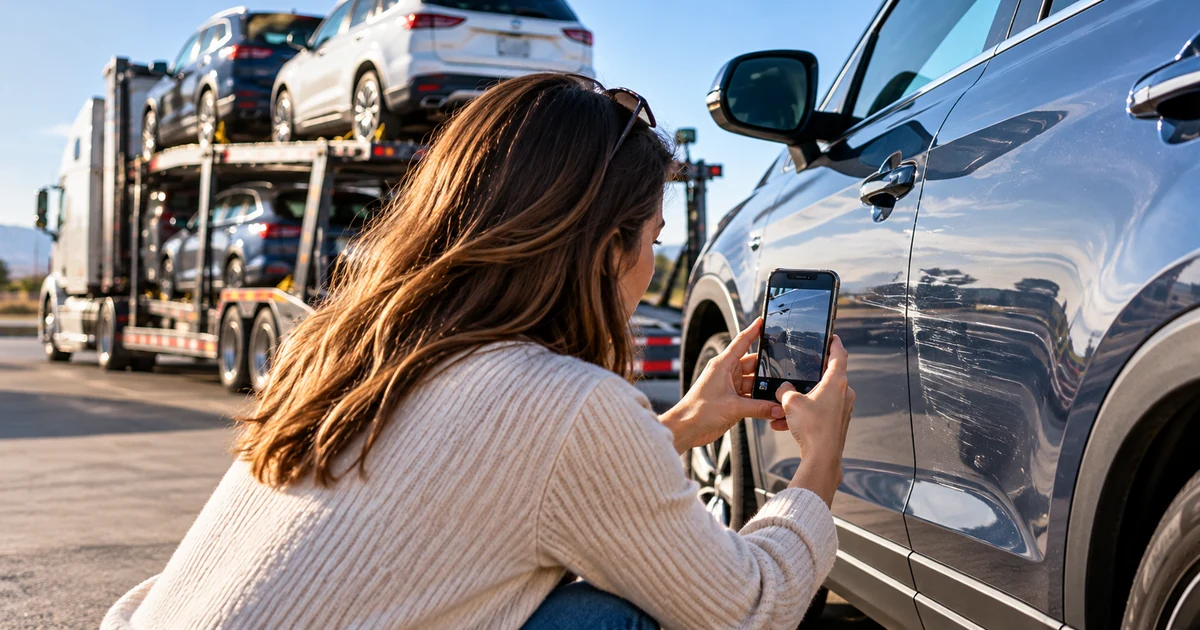
If your car arrives damaged, write every new damage point on the Bill of Lading before you sign it, photograph the damage before the car moves, and report it to your transport company that same day. The carrier’s cargo insurance pays for verified transport damage, but only when your pickup and delivery records prove the damage happened on the truck. This guide covers each step of the claims process, what insurance covers, and the mistakes that get claims denied.
Car shipping damage rarely happens, but when it does, the few minutes you spend inspecting your car at delivery decide whether the carrier’s insurance pays for the repair or you do. We have spent more than 17 years in auto transport, and we want you to walk into delivery day knowing exactly what to check, what to write down, and who to call. If you have not booked yet, take a moment to see how the car shipping process works so none of these steps catch you off guard.
What You Should Know Before You Start
Who pays if my car is damaged during shipping?
- If damage occurs in transit, the carrier that hauled your car holds cargo insurance, and that policy pays for verified damage.
- A good transport company runs the claim alongside you, gathers the paperwork, and works with the carrier’s insurer so you never chase anyone alone.
- Your own insurance can act as a backup. The National Association of Insurance Commissioners (NAIC) notes that comprehensive and collision coverage may help protect a car in transit, minus your deductible.
What protects my claim the most?
- The Bill of Lading. Note any new damage on it before you sign at delivery.
- A clean signature tells the carrier you accepted the car in good condition, and that makes a later claim much harder to prove.
Does carrier insurance cover everything?
- No. It covers physical damage to the vehicle during transport.
- Personal belongings, damage that existed before pickup, and mechanical problems unrelated to the trip usually fall outside the policy.
How quickly do I need to report damage?
- Report it the same day the vehicle arrives, even if you plan to collect repair estimates later.
- Every carrier sets its own deadline in the shipping paperwork, so read yours before pickup.
- You can still report damage you find after the driver leaves, but each day you wait makes it harder to prove the damage happened on the truck.
- How Common Is Car Shipping Damage, and What Does It Look Like?
- The Bill of Lading: Your Best Defense in a Car Shipping Damage Claim
- Before Pickup: How to Document Your Vehicle’s Condition for a Claim
- Car Damaged at Delivery? What to Do Before the Driver Leaves the Curb
- Step by Step: How to File a Car Shipping Insurance Claim That Holds Up
- Car Shipping Insurance: What Carrier Insurance Covers and Excludes
- Why Auto Transport Insurance Claims Get Denied and What to Do Next
- How to Lower Your Risk of Auto Transport Damage Before You Book
- Why ShipYourCarNow Handles Car Shipping Damage Claims Differently
- Frequently Asked Questions
How Common Is Car Shipping Damage, and What Does It Look Like?
Transport damage stays uncommon. Industry data shows an average damage rate of about 0.50%, according to the ShipYourCarNow 2026 U.S. Car Shipping Industry Report, and carriers running premium trailer systems report rates as low as 0.19% to 0.22%.
Some cars still arrive with problems, so you should know what to look for. These damage types show up most often in a car shipping damage claim:
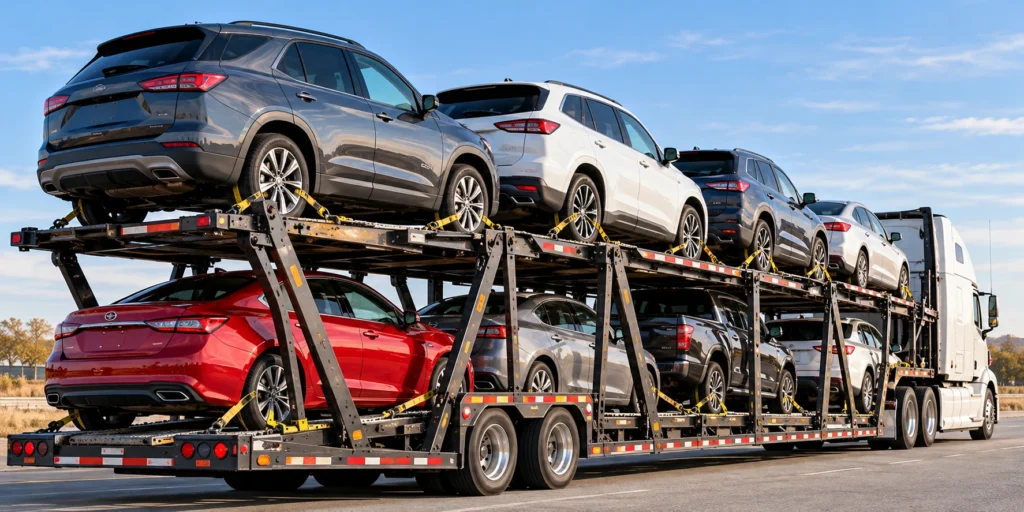
A windshield chip on a newer car can cost more than you expect. Many windshields hold cameras for driver assistance features, and CCC Intelligent Solutions found that 28.3% of repairable estimates now include a calibration, according to its 2026 Crash Course report. Small damage can still carry a real repair bill.
The Bill of Lading: Your Best Defense in a Car Shipping Damage Claim
The Bill of Lading, or BOL, works as both your receipt and the official condition report for your vehicle. The driver fills it out at pickup, you both sign it, and you sign it again at delivery. The carrier’s insurer compares those two snapshots, which is why proper vehicle inspection at pickup and delivery before signing the Bill of Lading matters.
A complete Bill of Lading records:
| What the document records | When it is recorded |
|---|---|
| Every scratch, dent, and chip that already existed, marked on a vehicle diagram | At pickup |
| The mileage, date, pickup address, and delivery address | At pickup |
| Signatures from you and the driver | At pickup and at delivery |
| Any new damage you note when the vehicle arrives | At delivery |
Claims often get denied when damage never made it onto the Bill of Lading. From the insurer’s side, a clean delivery signature reads as your agreement that the car arrived in good shape. Before you book any shipment, get a written quote and read the Bill of Lading terms so you understand exactly what you sign.
Never sign a blank or incomplete Bill of Lading at pickup, and never sign the delivery copy before you finish your inspection. If the carrier uses an electronic BOL, confirm that your copy lands in your email or text messages before the driver leaves.
Before Pickup: How to Document Your Vehicle’s Condition for a Claim
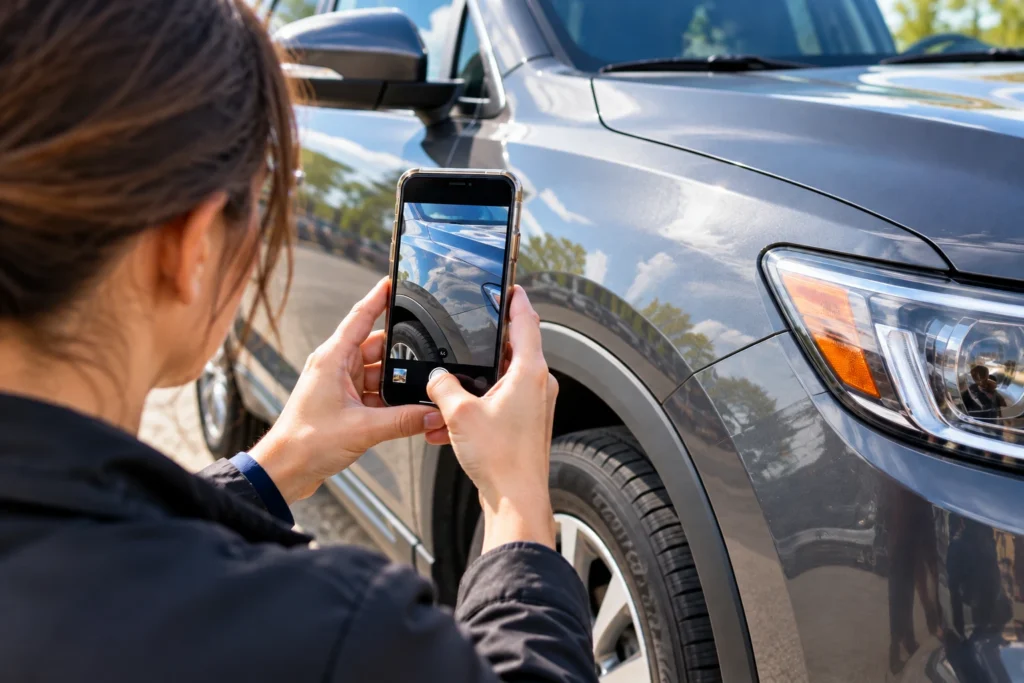
A strong case for a damaged car shipping claim starts days before delivery. The photos you take at pickup become your first point of proof. Without them, the carrier can argue that a scratch was always there.
Personal items deserve their own warning. Carriers haul vehicles, not household goods, and standard auto transport insurance does not cover belongings left inside the car. Loose items can also slide around during transit and crack trim or scratch leather. Our guide to shipping personal items in your car explains the rules in more detail.
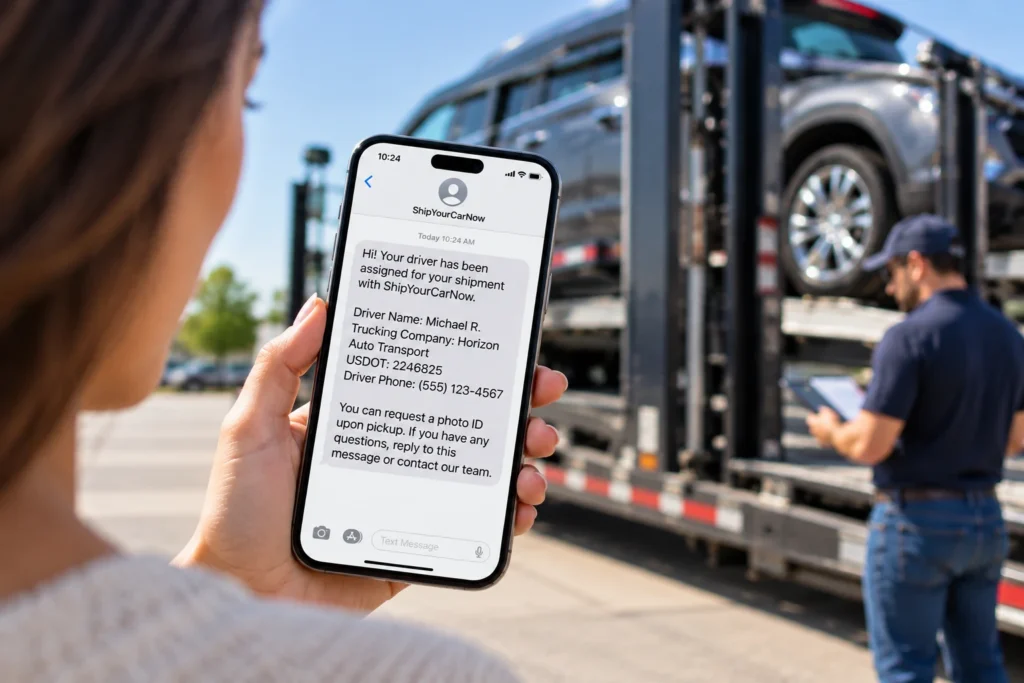
With ShipYourCarNow, you also get a text on pickup day through our Know Your Trucker program. It shows the assigned driver’s photo and license information, and confirms the equipment coming to your door. We also give you a checklist of what the driver should do during the pickup inspection, including how to photograph your vehicle properly.
Take your pickup photos with the driver standing beside you. When you both look at the same scratch at the same moment, you agree on the vehicle’s condition before it leaves your driveway, and that shared record makes all the difference later.
Car Damaged at Delivery? What to Do Before the Driver Leaves the Curb
Delivery day decides most claims. Once the driver pulls away with a signed, clean Bill of Lading, your position gets much weaker. Plan to inspect your car the moment the vehicle arrives, and give yourself enough time and light to do it right.
These delivery photos, paired with your pickup set, carry more weight than anything you can say about the car later. If you cannot attend delivery yourself, tell your shipping coordinator ahead of time, and send someone you trust with this list in hand. For everything else to check once the car arrives, keep our post car shipping checklist on your phone.

“We stay with our customer throughout the entire transport. You’ll generally have an individual agent who’s there to assist you throughout the whole process and we’re committed to full transparency.”
Step by Step: How to File a Car Shipping Insurance Claim That Holds Up
Once you document the damage, the claims process follows a predictable path. The more complete your file, the faster it moves through review.
| # | Step | What it involves |
|---|---|---|
| 1 | Contact your transport company the same day | Call your coordinator or claim contact, give your order number, and describe the damage. |
| 2 | Put the report in writing | Follow the call with an email that lists each damage point and attaches your photos, so you have a dated paper trail. |
| 3 | Gather your documents | You need the pickup and delivery Bill of Lading, your pickup photos, your delivery photos, the shipping agreement, and your written quote. |
| 4 | Get repair estimates from licensed body shops | Two or three estimates make a stronger case than one, especially with the average collision repair reaching $4,818 in 2025, according to CCC Crash Course 2026 Report. |
| 5 | Submit the damage claim | Submit the damage claim to the carrier’s insurance company, usually through your transport company. The insurer reviews the Bill of Lading, the photos, and the estimates to confirm the damage happened in transit. |
| 6 | Answer questions from insurer | Answer any questions the insurer sends back quickly, and keep copies of every message. |
| 7 | Wait for the decision | The insurer approves the claim in full, approves part of it, or denies it based on the evidence in your file. |
Repairs keep getting more complex, which raises the stakes on good documentation. Kyle Krumlauf, director of industry analytics at CCC Intelligent Solutions, said in the company’s March 2026 Crash Course release that “insurance coverage and claim filing behaviors have dramatically shifted.”
Found damage after the driver left? Report it the moment you spot it. Claims for concealed damage can still succeed when you report within a reasonable time, but you carry the burden of showing the carrier caused it, as the general rules for freight claims explain.
Every ShipYourCarNow carrier is vetted, licensed, and insured before pickup.
Car Shipping Insurance: What Carrier Insurance Covers and Excludes
Auto transport carriers must hold federal operating authority and insurance before they haul your car. According to the Federal Motor Carrier Safety Administration (FMCSA), many interstate carriers hauling for pay need public liability coverage from $750,000 to $5,000,000, but federal rules don’t require every motor carrier to carry cargo insurance.
That difference matters to you. Liability coverage protects other people on the road, while cargo insurance protects the car on the trailer. So ask about the carrier’s insurance on your cargo and the coverage level, not just whether the company has insurance.
Check the coverage limits against your car’s value. If you ship a high-value vehicle, ask whether the cargo limit covers its full worth, and ask your transport company about supplemental coverage. For luxury, classic, or exotic cars, enclosed car shipping keeps the vehicle out of weather and road debris. For everyday drivers, open car shipping remains the most affordable and widely available choice.
Your own insurance can add a second layer. Call your insurance provider before pickup and ask exactly what your personal policy covers while the car sits on a carrier. Our breakdown of understanding auto transport insurance walks through each coverage type.
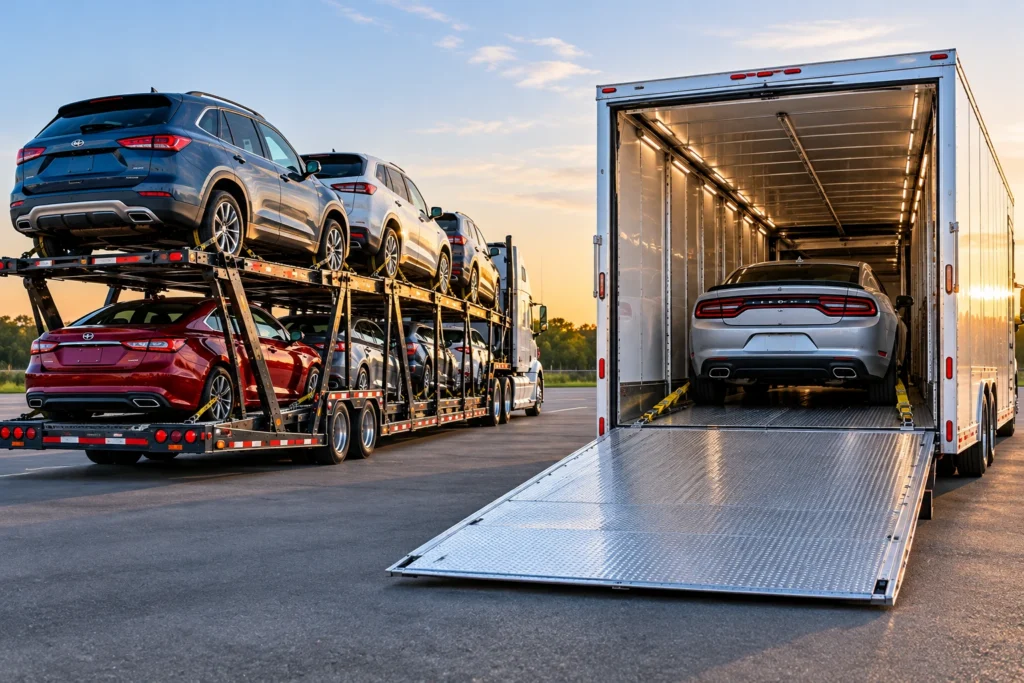
Every carrier that moves a car for ShipYourCarNow holds at least $1,000,000 in liability insurance and $100,000 in cargo insurance. We verify each carrier’s cargo insurance before assigning it to your vehicle, so your coverage gets confirmed before pickup.
Why Auto Transport Insurance Claims Get Denied and What to Do Next
Most denials trace back to missing evidence or missed deadlines rather than the damage itself. Filing claims promptly remains one of the few things fully in your control.
Common reasons a car shipping insurance claim gets denied:
If your auto transport insurance claim gets denied, take these steps:
“We don’t outsource our claims. We have our own claims team in-house that works to resolve those issues quickly and without any additional stress or friction to our customer.”
How to Lower Your Risk of Auto Transport Damage Before You Book
The best claim never needs filing. The choices you make before booking shape your odds more than anything that happens on delivery day.
Military families on PCS orders and seasonal travelers follow the same inspection rules as everyone else, with tighter timing. Our pages on military vehicle shipping and snowbird car shipping cover scheduling around report dates and peak migration weeks.
“You could always go online and find transport for less money, but what is really the cost of that $50 savings? What is the risk that you’re opening yourself up to?”
Why ShipYourCarNow Handles Car Shipping Damage Claims Differently
Our approach to transport damage starts long before your car reaches a trailer. We screen who hauls your vehicle, stay in contact while it travels, and keep clear communication going if anything goes wrong at delivery.
“In the rare occasion there might be an issue, just know there’s someone there to support you all the way through.”
Vetted carriers, locked pricing, and our own claims team from pickup to delivery.
Frequently Asked Questions
What happens if my car is damaged during transport?
You note the damage on the Bill of Lading, photograph it, and report it to your transport company the same day. Your transport company then helps you file a claim with the carrier’s cargo insurance. The insurer compares your pickup and delivery records, reviews your repair estimates, and decides how much to pay. A clean paper trail gives your claim the best chance.
Who is responsible for car shipping damage, the broker or the carrier?
The carrier that physically moved your car carries responsibility for verified transport damage, and its cargo insurance pays the claim. A broker arranges the shipment and should help you through the claim, from collecting documents to working with the insurer. At ShipYourCarNow, our own claims team handles that coordination for you. Always confirm how a company handles claims before you book.
What if I signed the Bill of Lading without noting damage?
A clean signature makes your claim harder, but not always impossible. Report the damage immediately and send your pickup and delivery photos to your transport company. If the damage could not have been visible at delivery, you may still have a case for concealed damage. The sooner you report it, the stronger your position.
How long do I have to file a car shipping damage claim?
Deadlines vary by carrier, and you can find yours in the shipping paperwork you receive before pickup. Report damage the same day your car arrives, even if you plan to add repair estimates later. A quick report keeps your claim clean and shows the damage happened on the truck. Waiting weeks invites the insurer to question when the damage occurred.
Does my own car insurance cover damage during shipping?
It might. Comprehensive and collision coverage on a personal policy may help with transit damage, usually minus your deductible. Coverage varies by insurer, so call your insurance company before pickup and ask directly. Treat your own insurance as a backup to the carrier’s cargo insurance, not a replacement.
What documents do I need for an auto transport claim?
Gather the pickup and delivery Bill of Lading, your pickup photos, your delivery photos, the shipping agreement, and at least one written repair estimate. Keep every email and text you exchange about the damage. Organized files move faster through the insurer’s review. Missing documents slow the process more than anything else.
Are windshield chips from road debris covered?
It depends on the carrier’s policy and on your proof that the chip happened in transit. Clear windshield photos at pickup and delivery give you the evidence you need. Chips from flying rocks come with the territory on open trailers, so shoppers with a high-value vehicle often choose enclosed transport instead. Ask your coordinator how the carrier handles glass damage before you book.
What if I find damage after the driver leaves?
Report it to your transport company right away, with photos and a written description. Concealed damage, such as a scrape on the undercarriage, can still support a claim when you report it promptly. You carry the burden of proving the carrier caused it, which makes your pickup photos critical. Waiting even a few days weakens your case.
What should I do if my car shipping insurance claim gets denied?
Ask for the denial in writing and find out the exact reason. Send any missing evidence, ask your transport company to escalate, and check whether your own insurance can help. If you believe a carrier or broker broke federal rules, you can file a complaint with the FMCSA. For larger disputes, a consumer attorney can explain your options.
Does enclosed transport prevent car shipping damage?
Enclosed transport keeps your car out of rain, hail, sun, and road debris, which removes the most common exposure risks. It does not remove loading risk, so the same inspection and Bill of Lading rules still apply. For luxury, classic, and exotic cars, the extra protection usually justifies the higher price. Whatever trailer you choose, good documentation remains your best protection against car shipping damage.


Senior automotive logistics professional with a passion for the industry and a 10+ year history of accomplishments. Proven track record of exemplary client management working with both RMCs, Van Lines and OEMs. Keen ability to react to an ever-changing marketplace while offering superior technology solutions, programs and services. Architect of award winning auto transport portal technology offering transparency and agility to clients, agents and transferees. Successful team builder and leader easily managing budgets with effective leadership, strategic planning, and problem-solving capabilities.