
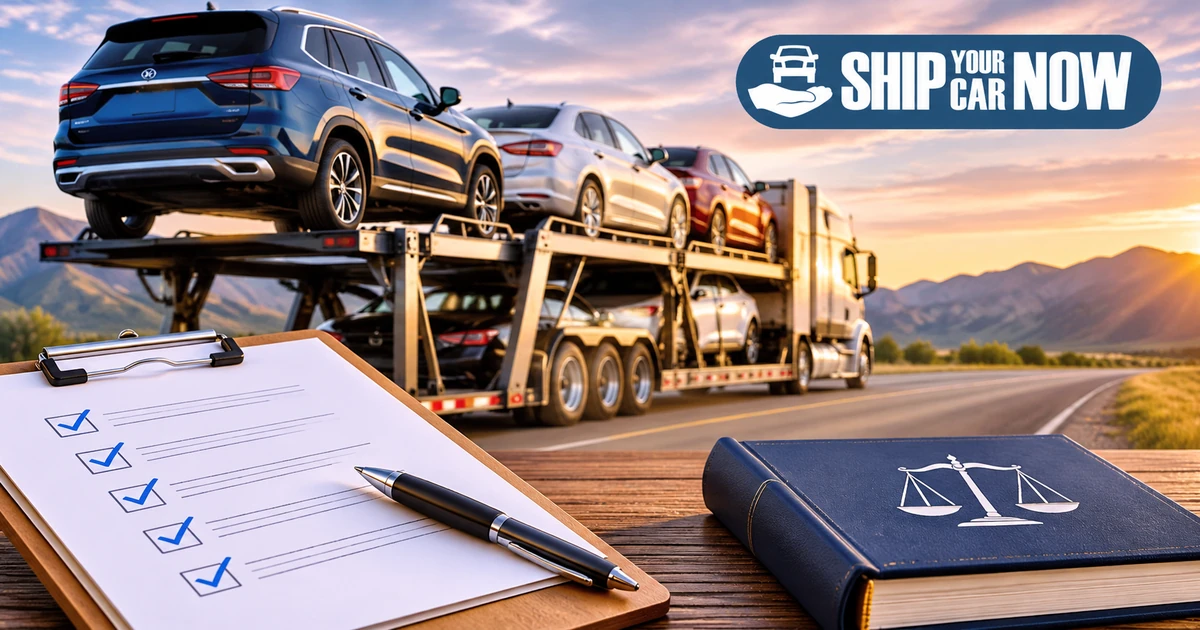
Car transport laws put most of the legal burden on the company hauling your car. Title 49 of Code of Federal Regulations (CFR) Chapter 3 states that any carrier moving vehicles across state lines for pay needs Federal Motor Carrier Safety Administration (FMCSA) registration, a USDOT number, operating authority, and at least $750,000 in liability coverage. Your side comes down to a valid photo ID, your registration and proof of insurance, a signed Bill of Lading, an empty car, and honest disclosure of its condition. This checklist covers both sides, plus state registration deadlines and the customs rules that apply when a car leaves or enters the country.
Car transport laws decide who can legally haul your vehicle, what insurance has to stand behind it, and which documents you need in hand before a driver ever touches your keys. We have spent 17 years in auto transport, and fly-by-night companies still count on shippers never checking their credentials. Below, the federal and state rules are broken down into plain terms, and we show you how the car shipping process works once the paperwork lines up.
What You Should Know Before You Start
Does the company shipping my car need a federal license?
- Yes, whenever it moves your car across state lines for pay. The FMCSA requires for-hire carriers in interstate commerce to hold a USDOT number and operating authority.
- A broker, the company that arranges your shipment and assigns a carrier, needs broker authority and $75,000 in financial security of its own.
- Ask for both numbers up front and look them up yourself before you pay a deposit.
Does federal law require cargo insurance on my car?
- Not for car haulers. Federal rules, as stated in 49 CFR 387.303(c), require cargo insurance filings only from household goods movers, not from auto transport carriers.
- Carriers must carry public liability coverage by law. Coverage for damage to your car comes from the cargo policy a carrier buys because brokers and shippers demand it.
- Ask for the certificate of insurance and compare the cargo limit to your car’s value.
What documents do I need on pickup day?
- A valid photo ID
- Your vehicle registration and proof of insurance
- A signed Bill of Lading, completed after a joint inspection with the driver
- A written authorization if a friend or family member releases the car for you
Can I pack my car full of boxes?
- No. Auto carriers hold authority to move vehicles, not household goods, and anything you leave inside rides without coverage.
- Most carriers allow up to 100 pounds of personal items in the trunk, below the window line, at your own risk.
- Hazardous materials such as fuel cans, propane tanks, and ammunition stay out entirely.
Do I have to register the car in my new state right away?
- Most states set their own deadlines for new residents to register an out-of-state vehicle.
- Look up your new state’s rule while the car sits in your driveway, because missing that window adds late fees to an already expensive move.
Table of Contents
- Who Writes Car Transport Laws? How Federal Motor Carrier Rules Work
- FMCSA Regulations Every Auto Transport Company Must Follow in 2026
- Transportation Workplace Drug and Alcohol Testing Programs for Drivers
- Insurance Coverage, Damage Claims, and How to Record Existing Damage
- Car Transport Requirements: Important Documents and Proof of Insurance
- Personal Items, Hazardous Materials, and Vehicle Prep Requirements
- State Rules and Additional Paperwork When Your Car Crosses State Lines
- International Car Transport Laws: Customs and Homeland Security Rules
- Why ShipYourCarNow Treats Compliance as the Starting Line for Shippers
- Car Transport Laws FAQ: Straight Answers to the Questions Shippers Ask
Who Writes Car Transport Laws? How Federal Motor Carrier Rules Work
Car transport in the United States is regulated by the U.S. Department of Transportation (DOT) and its Federal Motor Carrier Safety Administration, or FMCSA. The moment a truck carries your car across a state line for pay, the shipment enters interstate commerce, and federal rules govern the carrier from pickup to delivery. States layer their own rules on top, which we cover further down.
In 2026, the federal side works the following way:
- Every for-hire carrier in interstate commerce needs a USDOT number plus operating authority. Existing MC numbers remain in use under the new registration system, even though FMCSA has proposed phasing them out.
- Brokers need their own authority too. If you want the full picture of who does what, read our breakdown of the car shipping broker vs. direct carrier difference.
- On May 19, 2026, the FMCSA moved all registration into a new system called Motus, which uses identity checks and biometrics. The DOT estimated that several thousand suspicious registration numbers tie back to fraudulent carriers.
- At the May 2026 announcement, FMCSA Administrator Derek Barrs said the new system strengthens the agency’s ability “to detect fraud, improve data quality, and identify unsafe operators.”
That last point matters to you directly. Under the old system, a fraudster could register with little more than an email address, a name, and a physical address, so a clean-looking company name told you almost nothing. Before you sign anything, run the numbers yourself with our USDOT number check guide.

“The number one issue coming up in our space is fraudulent activities by criminals who are running professional organizations who are looking to break into back-end security systems, are looking to fraudulently take control of your car.”
FMCSA Regulations Every Auto Transport Company Must Follow in 2026
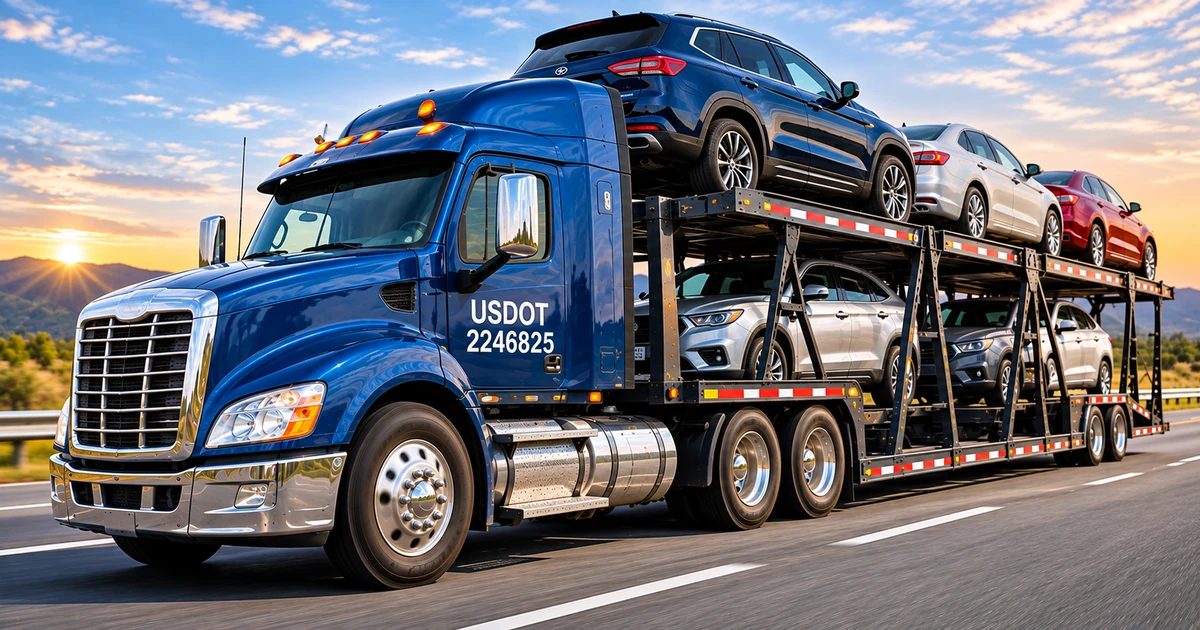
The FMCSA regulations that matter most to you as a shipper deal with three things: money, fatigue, and equipment, 49 CFR Chapter 3. Each rule protects your car in a different way, and each one gives you a question to ask before you book with any car shipping service.
- Liability coverage: For-hire carriers hauling nonhazardous property in trucks rated at 10,001 pounds or more must carry at least $750,000 in public liability coverage under federal rules.
- Broker security: Brokers must keep a $75,000 surety bond or trust fund. Since Jan. 16, 2026, the FMCSA suspends broker authority when that security falls below $75,000 and the broker fails to restore it within 7 business days of FMCSA’s notice.
- Hours of Service: A property-carrying driver may drive a maximum of 11 hours after 10 consecutive hours off duty, inside a 14-hour workday window. These limits exist to prevent driver fatigue.
- Weight limits: Transporters must stay within federal and state weight restrictions and stop at weigh stations along the route, per 23 CFR 658.17. Extra cargo inside customer cars pushes a loaded trailer toward those limits.
- Safety and equipment: Carriers must keep trucks and trailers in safe operating condition under federal motor carrier safety rules, and roadside inspections check that equipment along the route, per 49 CFR Part 396.
Hours of Service rules explain why no honest auto transport company promises an exact delivery date. A driver who hits the daily limit has to stop, even 40 miles from your driveway. We give you an estimated delivery window instead, and your shipping coordinator updates you if weather or traffic moves it.
Transportation Workplace Drug and Alcohol Testing Programs for Drivers
Most drivers hauling cars on full-size trailers hold a commercial driver’s license, and that license comes with federal drug and alcohol rules. The governing regulation, 49 CFR Part 40, carries a long title: Procedures for Transportation Workplace Drug and Alcohol Testing Programs. In plain terms, it spells out how employers test drivers and what happens after a failed test.
This is what the rules require today:
- Commercial Driver’s License drivers face pre-employment, random, post-accident, and reasonable suspicion testing under FMCSA rule 49 CFR Part 382 Subpart C.
- For 2026, FMCSA set the minimum random testing rates at 50% for drugs and 10% for alcohol of the driver pool each year.
- DOT proposed adding fentanyl and norfentanyl to its drug panel in September 2025. As of September 2026, the proposal still has not become a final requirement, so treat any claim that fentanyl testing already applies with caution.
Why should this matter to someone shipping a Honda to college? A carrier that runs a sloppy testing program tends to run a sloppy operation overall. Alcohol testing programs, driver qualification files, and insurance filings all point to the same question: does this transport company take compliance seriously when nobody watches?
Ask any auto transport company how it verifies the carrier assigned to your car. A good answer names real checks, such as USDOT status, insurance on file, and driver performance history. A vague answer like “all our carriers are licensed” tells you the company probably posts your load and hopes for the best.
Insurance Coverage, Damage Claims, and How to Record Existing Damage
Insurance confuses more first-time shippers than any other part of this process, mostly because three different policies touch your car. Knowing which one pays for what saves you from ugly surprises during damage claims.
- Carrier liability: Required by federal law, and it covers injuries and property damage the truck causes on the road.
- Carrier cargo insurance: Covers damage to the vehicles on the trailer. Federal law does not require it for auto haulers, so the amount depends on the carrier and on what its broker demands.
- Your own auto policy: Coverage for a car in transit varies from one personal policy to the next, so call your agent before pickup.
At ShipYourCarNow, every carrier we assign holds a minimum of $1,000,000 in liability insurance and $100,000 in cargo insurance. For high-value vehicles, compare the cargo limit to your car’s worth and ask for insurance documents in writing. Enclosed car shipping gives exotic and classic cars maximum protection, while open car shipping remains the most cost-effective option for daily drivers. For a deeper look at policy types, read our guide to what auto transport insurance covers.
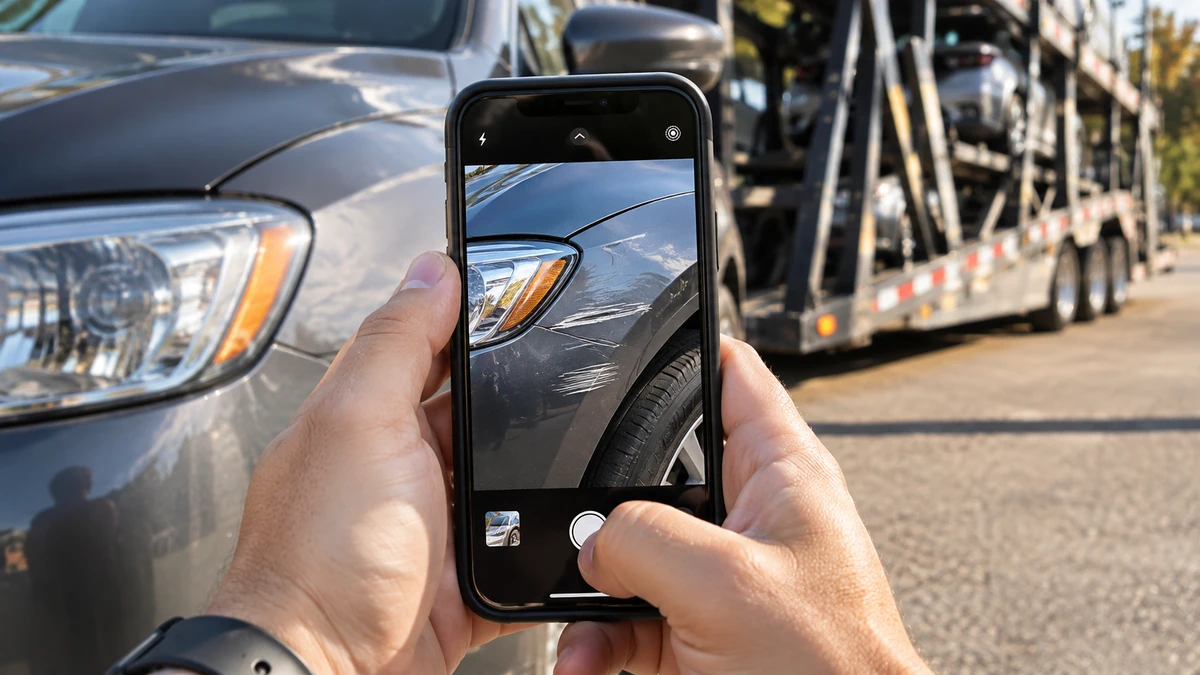
Documenting the vehicle’s condition is your strongest protection, and it costs nothing. Take date-stamped 360-degree photos of every panel, the roof, the wheels, the interior, and the odometer. Then make sure the driver records all pre-existing damage on the Bill of Lading, the legal contract, and the receipt that follows your car from pickup to delivery. That document plays a vital role in any claim you file later.
Never sign a clean Bill of Lading at delivery before you inspect the car. Once you sign that the vehicle arrived in good condition, proving that new damage happened in transit becomes very hard. Note any new marks on the Bill of Lading while the driver stands there, take photos, and call your shipping coordinator right away.
“We don’t outsource our claims. We have our own claims team in-house that works to resolve those issues quickly and without any additional stress or friction to our customer.”
Car Transport Requirements: Important Documents and Proof of Insurance
Your list of car transport requirements as a shipper runs much shorter than the carrier’s, but a missing document can still stall a pickup. Gather the necessary paperwork a week ahead to avoid delays. Your own documents stay the same whether your car crosses town or the country, but the carrier’s rules change. Interstate moves need a carrier with federal FMCSA authority, while intrastate moves within one state follow state rules, often including a USDOT number. Exports add another layer entirely.
Valid government-issued photo ID for pickup and delivery
Current vehicle registration
Proof of insurance, which some companies request before pickup
Vehicle title, required for exports and often needed when a car changes owners across state lines
Lienholder authorization if a lender still holds the title
Signed Bill of Lading with a completed vehicle inspection report
Written authorization for anyone releasing or receiving the car on your behalf
Your booking confirmation with the pickup window and car shipping quote in writing
Online car buyers and auction purchasers need extra care here. When a seller hands the car to the carrier, confirm in advance who signs the Bill of Lading at pickup and who holds the title. One phone call now keeps a pickup from falling apart on the curb later.
Get every term in writing before you sign, including the price, the pickup window, and the cancellation policy. A written quote and a clear Bill of Lading protect you far better than any verbal promise.
Photograph your registration, insurance card, title, and signed Bill of Lading, then save the images to cloud storage. If a document goes missing during a move, you still hold proof, and you can send it to us or your insurer in seconds.
Personal Items, Hazardous Materials, and Vehicle Prep Requirements
This section covers the rules shippers break most often, usually without realizing it. Auto carriers hold authority to transport vehicles, not household goods. Personal belongings left inside travel without coverage from the carrier’s cargo insurance, and an overloaded car can cause the driver to refuse the pickup.
- Keep personal items under 100 pounds, packed in the trunk and below the window line.
- Remove valuables, electronics, and important documents completely.
- Leave out all hazardous materials, including fuel cans, propane tanks, ammunition, fireworks, and flammable liquids. Carriers will not transport them inside your car.
For the full rundown, see what you can and can’t pack inside your car.
Keep the gas tank at about a quarter full
Disable car alarms to prevent battery drain during transport
Check tire pressure and inflate to the manufacturer’s spec
Check fluid levels and look underneath for active leaks
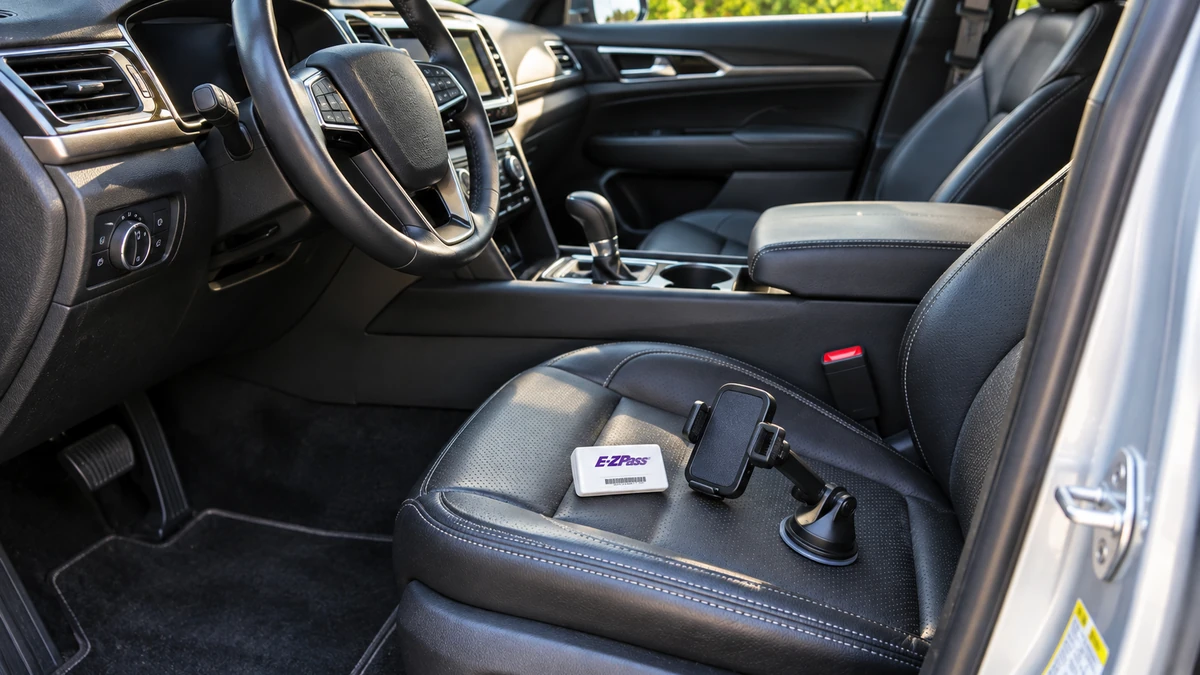
Remove bike racks, roof boxes, and toll tags
Fold in mirrors, retract any manual antenna, and secure loose trim
Take 360-degree photos of the car’s condition
Disclose every mechanical issue before pickup day
The car also has to roll, brake, and steer. Inoperable vehicles require special loading equipment and cost more to ship, which ties directly into how car shipping costs are calculated. Access matters too. A transport truck needs about 75 to 80 feet of straight clearance, so if your street has tight turns or low trees, door-to-door auto transport can still work by meeting the driver at a nearby parking lot.
State Rules and Additional Paperwork When Your Car Crosses State Lines
Federal law sets the floor, and states can impose additional regulations on top of it. The differences rarely affect the truck in transit. They hit you after delivery, when you register the car, pass an emissions check, or transfer a title in your new home state.
Common state rules to check before your car ships:
- Vehicle registration deadlines for new residents.
- Emissions or safety inspections before a car can be registered.
- Title transfer steps when you buy a vehicle from a seller in another state.
- Temporary permits for a car that arrives without current plates.
If your deadline looks tight, expedited car shipping shortens the pickup window so you have more time at the DMV. Service members on PCS orders face their own timing pressure, and our team plans military vehicle shipping around report dates. Seasonal residents deal with a different question of which state counts as home. If you split the year between two states, our snowbird car shipping coordinators can plan both legs of the trip. Book early, because peak migration weeks bring higher prices and tighter carrier schedules.
Call or visit your destination state’s motor vehicle website before you book. Ask three questions: how many days you have to register, whether the car needs an inspection, and which documents to bring. You avoid legal complications and late fees, and you know exactly what to keep out of the car.
International Car Transport Laws: Customs and Homeland Security Rules
Car transport across national borders involves customs and import or export regulations. U.S. Customs and Border Protection (CBP), part of the Department of Homeland Security, enforces these regulations on motor vehicles leaving and entering the country. These rules carry real teeth. A missed deadline can leave your car sitting at a port while storage fees pile up.
For exports, CBP requires the title and supporting documents at least 72 hours before export for vehicles leaving by ship or air. For imports, CBP requires the following:
- The original bill of lading, bill of sale, and foreign registration for CBP clearance.
- Environmental Protection Agency (EPA) form 3520-1 and DOT form HS-7, which declare the emissions and safety standards the car meets.
- Proof that a car under 25 years old meets all Federal Motor Vehicle Safety Standards (FMVSS).
- EPA compliance under the Clean Air Act, or a certified importer to modify a nonconforming vehicle.
CBP also warns against using your car as a shipping container, since you must declare everything inside it on entry. If you plan an overseas move, our international car shipping team helps coordinate customs documentation before your car reaches the port.
CBP tells buyers to stay skeptical when a foreign dealer claims a car already meets U.S. standards. A car that fails EPA or DOT requirements must be brought into compliance, exported, or destroyed. Confirm eligibility before you buy, not after the car lands.
Why ShipYourCarNow Treats Compliance as the Starting Line for Shippers
Cargo theft losses hit an estimated $725 million in 2025, a 60% jump from the year before, according to Verisk CargoNet. The firm’s Keith Lewis said criminal groups have grown “more selective and sophisticated” in what they target. Licensing alone does not stop that kind of fraud, verification does, and verification drives everything we do.
Here is what that looks like at ShipYourCarNow:
The same process applies whether our clients ship one sedan or a dealership’s inventory, and those reviews tell our customer satisfaction story better than we can.
“On the day of pickup, you will receive a text message from us which will contain a link showing you the driver’s license and photo information of the assigned driver, as well as confirmation of the type of equipment showing up to pick up your vehicle.”
Cheaper car shipping companies exist, and we won’t pretend otherwise. Many of them post your car to a load board and hope the right carrier takes it, which leaves you guessing about insurance and driver history.
“You could always go online and find transport for less money, but what is really the cost of that $50 savings? What is the risk that you’re opening yourself up to?”
When you’re ready, get an instant car shipping quote online or call us at (866) 390-0354 to talk with a real person about your move.

Vetted carriers, locked-in pricing, and a coordinator who stays with you from pickup to delivery.
Car Transport Laws FAQ: Straight Answers to the Questions Shippers Ask
What are the main car transport laws in the United States?
The FMCSA and DOT set the core federal rules for interstate auto transport. Carriers must register with the FMCSA and hold a USDOT number and operating authority, carry at least $750,000 in public liability coverage, and follow Hours of Service and drug and alcohol testing rules. Brokers must keep $75,000 in financial security. States add their own rules on registration, inspections, and title transfers after the car arrives.
How can I verify that an auto transport company is legally registered?
Ask for the company’s USDOT and MC numbers, then look them up through FMCSA’s registration system. Confirm that the legal name matches the company you talked to, that its authority shows as active, and that insurance appears on file. Our USDOT number check guide walks you through each step. The whole process takes about five minutes and can save you from a costly scam.
Does my car have to run to be legally shipped?
No federal rule bans shipping a non-running car, but the equipment changes and so does the price. For standard transport, the vehicle must roll, brake, and steer under its own power so the driver can load it. Inoperable vehicles require special loading equipment and cost more to move, which feeds into how car shipping costs are calculated. Disclose any mechanical issue when you book, because a driver who finds an undisclosed problem at the curb can refuse the shipment.
Can a driver refuse to load my car at pickup?
Yes, and it happens more often than most shippers expect. Common reasons include a car packed with personal belongings, an undisclosed mechanical fault, a leak, or a pickup spot the truck cannot safely reach. What happens to your deposit depends on the agreement you signed, which is why the cancellation and rescheduling terms deserve a careful read before you book. Honest disclosure up front prevents almost every one of these situations.
Are there legal weight or height limits on the vehicle being shipped?
The limits apply to the loaded truck rather than to your car alone. On the Interstate System, federal law caps gross vehicle weight at 80,000 pounds, with 20,000 pounds on a single axle and 34,000 pounds on a tandem axle. Carriers plan each load around those numbers, which explains why extra cargo inside your car creates a real problem. Lifted trucks, oversized SUVs, and tall vans often need specialized equipment, so give the transport company accurate dimensions when you request a quote.
Who is liable if the transport truck is in an accident?
The carrier’s public liability coverage, required under federal financial responsibility rules, responds to injuries and property damage the truck causes. Damage to your vehicle while it rides on the trailer falls under the carrier’s cargo policy instead. Those limits vary by carrier, which is the reason to confirm the cargo amount before pickup rather than after a crash. Your signed Bill of Lading and pre-shipping photos establish what condition the car left in.
What is the legal difference between a broker and a carrier?
A carrier owns the truck and physically moves your vehicle, and it needs a USDOT number plus operating authority from the FMCSA. A broker arranges the shipment and assigns a vetted carrier, and federal law requires it to hold $75,000 in financial security rather than cargo insurance. Both models operate legally, and most national companies work as brokers because they can match your route to the right equipment. Our broker versus carrier guide breaks down what each one owes you.
Why won’t my car shipping company guarantee an exact delivery date?
Federal Hours of Service rules cap driving at 11 hours after 10 consecutive hours off duty, and weather, traffic, and other pickups on the route can shift the schedule. An honest company gives you an estimated delivery window and keeps you updated. Be cautious of anyone promising an exact date, because that promise often breaks once your car sits on the truck.
What happens if my car arrives with damage?
Inspect the car before you sign the delivery receipt and compare it to your pre-shipping photos and the Bill of Lading. Note any new damage on the Bill of Lading while the driver remains on site, take photos, and contact your transport company right away. At ShipYourCarNow, our in-house claims team handles the process directly. Signing a clean delivery receipt first makes any damage claim much harder to prove.
Are there special laws for shipping a car overseas or importing one?
Yes. For exports, CBP needs your title and supporting documents at least 72 hours before a vehicle leaves by ship or air. Imports require EPA form 3520-1, DOT form HS-7, and proof the car meets U.S. emissions and safety standards. Vehicles under 25 years old must meet all Federal Motor Vehicle Safety Standards to enter the country permanently. Cross-border moves are subject to customs rules on top of the car transport laws that govern every domestic shipment.


Senior automotive logistics professional with a passion for the industry and a 10+ year history of accomplishments. Proven track record of exemplary client management working with both RMCs, Van Lines and OEMs. Keen ability to react to an ever-changing marketplace while offering superior technology solutions, programs and services. Architect of award winning auto transport portal technology offering transparency and agility to clients, agents and transferees. Successful team builder and leader easily managing budgets with effective leadership, strategic planning, and problem-solving capabilities.